Showing posts with label Week 2. Show all posts

Friday, August 29, 2014

Famous Last Words Week 2


So, here we are – finished with the second week of classes! This week of assignments was a lot different than last week’s, but I definitely feel that the activities last week helped familiarize me with the expectations and format of the class. I also really like that that the weekly schedule will follow the same pattern in weeks to come. I think that will make falling into a routine a lot easier. Getting started with the Un-Textbook was fun and I’m looking forward to continuing my exploration of Ovid in Week 3.

I also enjoyed brainstorming storybook ideas. There are so many options! Whenever there are pages upon pages of stories to consider, everything seems a little daunting, but I’m sure I’ll narrow my scope week by week, slowly but surely. Hopefully, I can settle on a theme that I’ll be happy with without changing my mind too many times. I’m a pretty indecisive person, so this might be difficult for me, but I think it’ll be okay. I’ll work it out.

Again, I enjoyed reading other students’ assignments and posts this week. I liked that you switched the group comment assignments because this gave me a chance to “meet” some of the other students in the class and explore their blogs and writing styles. It’s really interesting to read the introductions people have written. I think that through these introduction, I have a lot better grasp on some of the people in this online class – their interests, their collegiate lives, etc. – than I do on most of the people in my on-campus classes!

I am so looking forward to the long weekend (4 days long for me, since I don’t have class on Fridays!) even though I probably won’t do much with myself. I know it’s the last weekend I’ll have off of work for a while, so I’m not going to let myself feel guilty about lounging around.

(Oklahoma City and the Devon Boathouse area, near where I work, Flickr.com)

Tuesday, August 26, 2014

Essay Week 2: Reviewing Ovid I

Because this week was the first week we used the Un-Textbook, I was a little shaky on everything. At first, I couldn’t decide what unit to select. I wanted to try to create some sort of order or connection between my readings, but I abandoned that idea quickly and decided to go for whatever sounded good to me at the time. I’m not sure if this will necessarily help me in the long run, but I don’t think it’ll hurt me either.

First of all, I think the Un-Textbook is really cool. It’s awesome that you’ve taken the time to assemble something with so much variety and I like to think it's a resource I’ll use even after I’m finished with this class. It feels very personalized, which I like, and we didn’t have to pay for it, which I like even more!

The unit I selected was Ovid’s Metamorphoses I. I enjoyed these readings. After I sat down and focused, I was able to knock all of the readings and the reading journals out in a couple of hours. To be honest, I was a little overwhelmed at first, but length turned out to not be an issue for me at all. I liked most of the stories, but I was also familiar with most of the stories in some capacity.

I thought the notes at the beginning of each story were really helpful. I don’t think any additional background information would be necessary to understand the readings, but some type of name chart or family tree might help to keep things straight. Some of the stories use multiple names for the same character, but thankfully you pointed this out in your notes at the beginning in most cases.

I liked this unit and thought the description of it was straightforward. I also liked that it was several stories making up one unit, as opposed to one long reading taking up an entire unit. Personally, I find it easier to focus on readings if they’re broken up more like that.

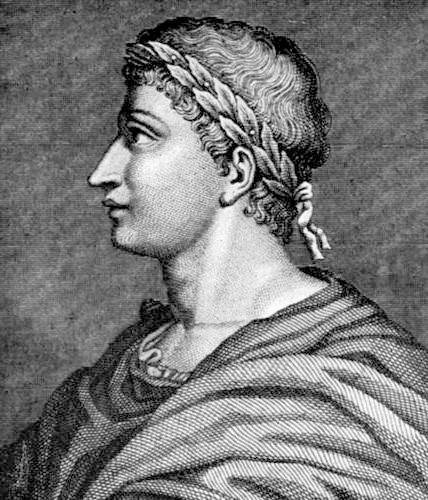
(A depiction of Ovid, Wikimedia Commons)


Storytelling for Week 2: Semele

The house lights came up and the crowd began to roar. Everybody in the audience was ready for some good, old-fashioned paternity test drama. The Jerry Springer show played out in nearly the same way episode after episode, but viewers and audience members didn’t seem to care. They continually ate all the nonsense and craziness up.

Jerry Springer, the host of the esteemed television show, walked out and gave an opening monologue much like the one he’d given the day before. “Hello ladies and gentlemen!” he said. “Today, we have with us Juno, who claims that there is no way that her husband of many years, Jupiter, is the baby daddy to another woman!”

With this, all sorts of hoots and hollers erupted from the crowd. After giving the people a moment to get it out of their systems, Jerry quieted the audience down and turned to Juno, who was seated on stage with him. “Juno,” Jerry offered, “Tell us your story.”

Juno proceeded to explain her marriage with Jupiter. After some questioning, Juno did admit that her husband had a bit of a wandering eye. “Even though I know he looks at other women, he loves me! The thought that he could be the father of Semele’s child infuriates me. It makes me sick! He is much too powerful and good for someone like her! He’s completely out of her league. I came here today to get some answers and shut her up about the whole thing, once and for all!” Juno said, rising from her seat in a fit of rage.

With that, Jerry invited out Semele. The crowd booed. “So, Semele,” Jerry began, “You’re very pregnant. There’s no questioning that fact, but what we can question here is who that father of this child is.” The crowd started a baby daddy chant which neither Juno or Semele seemed amused by. “Jupiter is the father,” Semele insisted. “I’ve come here today to set this straight.”

Juno sighed dramatically from her chair across the stage. “Do you know how many men claim to be something they’re not? Who wouldn’t claim to be Jupiter?” she asked, her tone filled with contempt. “Men will say whatever they need to say to get what they want, and I’ve very suspicious of this whole thing. It’s not good enough for him merely to say he is Jupiter, we must have proof of this!” exclaimed Juno. 

By this point, the audience was out of control. A crew member walked out and handed Jerry an envelope with paternity test results. “In this case,” Jerry began dramatically, “Jupiter…IS the father!” Semele had asked for proof and now she had received it, but this news was more than her body could handle. All of the excitement sent her into delirium, which led to her having a stroke and dying an unfortunate and untimely death.

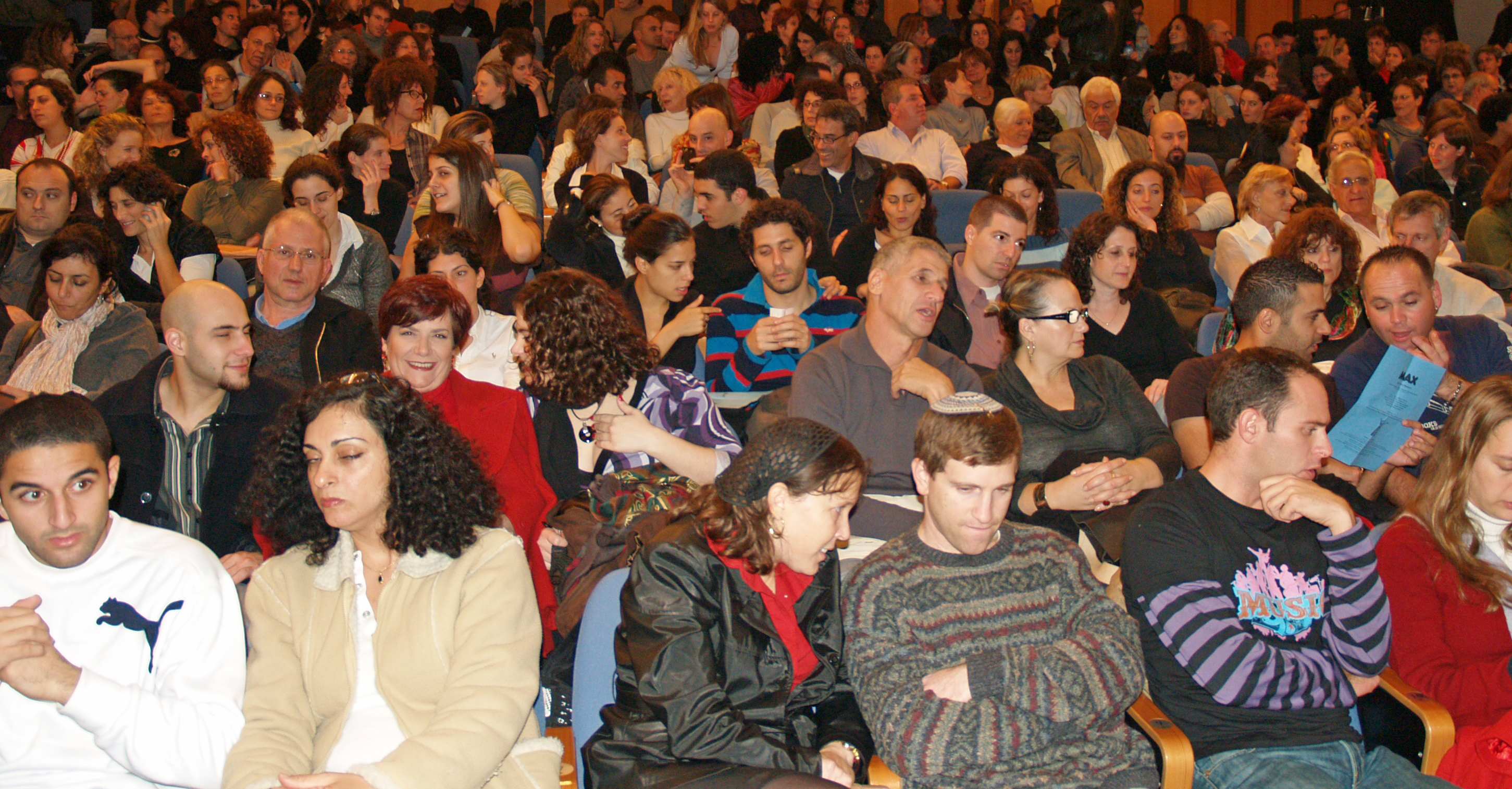
(Talk show audience, Wikimedia Commons)

Author's Note: I chose to base my retelling on Ovid's story of Semele. In the original, Juno is furious that her husband Jupiter has impregnated Semele. To get back at Semele, she disguises herself, goes to Semele, and convinces Semele that she must ask for Jupiter to unleash his powers on her to prove that he is really what he says he is. When Semele asks Jupiter to do this, he obliges, but his godly powers are much too powerful for her to withstand and she dies. Basically, the whole story is about jealously, possible mistaken identity, and possible paternity issues. This made me think of the Jerry Springer Show (my greatest guilty pleasure in life) right off the bat. I didn't really know how to kill of Semele in my retelling, but I decided that it was only right that the proof she asked for was the thing that killed her.

Bibliography:
Book: Metamorphoses 
Author: Tony Kline (Translated Ovid's original into english)
Year Published: 2000

Sunday, August 24, 2014

Week 2 Reading Diary: Ovid I


Week 2: Ovid I
For this reading diary, I have decided to make some quick notes about each story contained in the reading. I will go through them in the given order.                                                                          


Deucalion and Pyrrha 
This reading started out with a flood/creation story like those that occur in many cultures. There are only two survivors of this all-consuming flood, one male and one female, the two for whom this story is named. One of the quote that struck me from this story is as follows:

"How would you feel now, poor soul, if the fates had willed you to be saved, but not me? How could you endure your fear alone? Who would comfort your tears? Believe me, dear wife, if the sea had you, I would follow you, and the sea would have me too. If only I, by my father’s arts, could recreate earth’s peoples, and breathe life into the shaping clay! The human race remains in us. The gods willed it that we are the only examples of mankind left behind."

Io
In this story, poor Io had more than her fair share of trouble. She was raped and then turned into a heifer by Jupiter, but she is still clever enough (and human enough) to use language to spell out her situation to her father. In the end, she is returned to being a human. I found the side story about Argus and his hundreds of eyes to be interesting as well. It made me wonder if he served another purpose in other Greek myths.

Phaethon and the Sun
The family lineage got a little hard to follow for me. I kept referring to the notes at the top to keep straight who was supposed to be related to/descended from one another. I really liked the description of the fantastic Palace of the Sun. I also thought the personification of the seasons was interesting:

"Young Spring stood there circled with a crown of flowers, naked Summer wore a garland of ears of corn, Autumn was stained by the trodden grapes, and icy Winter had white, bristling hair."

It seems like it's going to be difficult for Phaethon to find success, but it also seems like he's not going to back down from his request.

Phaethon's Ride
Here, Phaethon gets his wish and is able to take the chariot out, even though he has been repeatedly told of all the things that could go wrong along the way. Phaethon is unexperienced and he loses control, allowing the horses to run free. This causes a lot of destruction. The sky was burning, and the Earth burned too.

The Death of Phaethon
As the title suggests, Phaethon dies in this part. I found it difficult to feel sorry for him because he was told what he would be getting himself into and he foolishly thought he would be able to handle that. Again, there is a lot going on with family connections and I had to look over some parts more than once to establish what was really going on. I also didn't really understand what the purpose of the sisters turning into trees was supposed to be. At least the horses were recaptured.

Callisto
This story frustrated me because Juno turned her rage toward Callisto and her child instead of turning her rage toward Jupiter, who was actually the only one guilty of doing anything wrong. Callisto is essentially punished (turned into a bear) for something she didn't do and wanted no part of. It's really sad at the end because her own son is about to kill her, but Jupiter does probably one of the only decent things he's ever done and stops that from happening. Mother and son are turned into constellations.

Semele
Again, Juno avoids the source of the problems and acts out against the innocent party, in this case, Semele. Juno tricks Semele into wishing to feel all of Jupiter's power, something she is ultimately unable to survive. The ending of this story was pretty bizarre. Semele's child was torn from her womb and "sewn into his father’s thigh to complete his full term". Yikes.

Echo
The concept of being born twice, as Bacchus was, still seems pretty ridiculous. Somehow, he seemed to turn out alright. The story of Echo and Narcissus begins in this story. I'm pretty familiar with this story, but I think it's a really interesting one.

Narcissus
Narcissus felt he was too good for all those that yearned for him. When he saw himself for the first time, these suspicions were only confirmed. It's strange to think of the idea of unrequited love as being in love with your own being. In the end, Narcissus can no long move forward with his life in this state and wishes for his own death:

"Now sadness takes away my strength, not much time is left for me to live, and I am cut off in the prime of youth. Nor is dying painful to me, laying down my sadness in death. I wish that him I love might live on, but now we shall die united, two in one spirit."

He dies and is transformed into a flower.

Pyramus and Thisbe
As stated in the notes, this story reminded me a lot of Romeo and Juliet. It's super sad. They were kept apart, so they went to great extremes to meet. Neither one of them had to die, but Pyramus was blinded by love and acted hastily and in the end they both ended up killing themselves.

Mars and Venus
This was a very short story and not a lot happened in it. Basically, Vulcan captures his cheating wife and her lover in a metal net he crafted and makes them the laughing stock of the community.

Perseus and Andromeda
Perseus just seems like an all-around good guy. He is accomplishing feat after feat. He has already killed Medusa, a task considered impossible by many, and now he's about to rescue a princess from a sea monster. He has a pretty exciting life. Also, he can fly around on his shoes, which is a pretty cool thing to be able to do.

Perseus and Medusa
To nobody's surprise, Perseus is able to defeat the sea monster and save Andromeda. After the battle, Andromeda and Perseus are married. At the wedding feast, Perseus outlines his battle with Medusa because everybody there can't get enough of him and how great he is. I think Medusa is an interesting character and her story is a complex one. Even though she's portrayed as a villain, she wasn't always that way, nor did she necessarily make herself into that.